
Individuals who want to become a travel agent in Delaware can enter the field without a college degree, mandatory professional certification, or state-issued travel agent license.
Several business requirements may still apply. An independent Delaware travel agent may need a state business license, local approval, tax registration, and access to industry booking systems.
Many beginners who want to become travel agents in Delaware choose the host-agency model because it can provide training, supplier access, booking technology, commission processing, and ongoing support.
We can help new advisors enter the industry through training, mentoring, supplier education, booking access, and business tools.
Step #1 – Choose Your Travel Agent Business Model

Anyone planning to become a travel agent in Delaware should first decide how they want to work.
An agency employee works within an established business and may receive hourly pay, a salary, commissions, or a combination.
An independent travel agent runs a personal business while using a host agency’s credentials, supplier relationships, booking systems, and commission tools.
Remote work and flexible hours make this model practical for people who want to start part-time.
A standalone agency owner controls the full operation but must manage accreditation, supplier contracts, insurance, accounting, technology, and legal compliance.
Before selecting a path, consider:
- Startup funds
- Preferred schedule
- Need for mentoring
- Desired business control
- Comfort with sales
- Administrative workload
- Commission terms
- Program fees
Earnings vary according to employment status, booking volume, commission terms, and specialization.
Nationally, the median annual wage for travel agents was $48,450 in May 2024, with commission income included in the estimate.
A beginner aiming to become a travel agent in Delaware should also review host-agency contracts carefully.
Commission percentages, payment schedules, training access, client ownership, and termination rules can affect long-term income.
Step #2 – Review Delaware Business Requirements
Delaware does not generally require a professional license to work as a travel agent.
An independent Delaware travel agent may still need to register with the Delaware Division of Revenue and obtain a state business license.
Reported license costs include:
- $225 for the first business location
- $25 for each additional location
- Renewal on or before December 31
- Registration through the Combined Registration Application
Anyone preparing to become a travel agent in Delaware should also review:
- Local business permits
- Home-occupation rules
- Zoning restrictions
- State tax duties
- Federal tax duties
- Bookkeeping requirements
- Travel-insurance regulations
Employees usually operate under their employer’s business systems.
Hosted advisors may use agency accreditation while still handling their own taxes and business registration.
Current fees and filing rules should be checked directly with Delaware government agencies before launching a Delaware travel agent business.
Step #3 – Complete Travel Agent Training
View this post on Instagram
Formal education is optional, but training can help someone become a travel agent in Delaware with greater confidence.
A beginner travel agent needs practical knowledge covering bookings, supplier rules, sales, client communication, documents, changes, and cancellations.
Useful training topics include:
- Travel-industry terminology
- Domestic and international geography
- Air, hotel, cruise, and tour bookings
- Rental-car reservations
- Itinerary planning
- Booking technology
- Passports and visas
- Entry requirements
- Travel insurance
- Customer service
- Sales techniques
- Professional ethics
People who want to become a travel agent in Delaware can choose among:
- Self-paced online courses
- Live virtual instruction
- Host-agency onboarding
- Supplier certifications
- Destination-specialist programs
- Mentored booking practice
A useful program should offer current booking knowledge, practical assignments, instructor support, and business-development education.
Interesting fact: Tourism is Delaware’s fourth-largest private employer, accounting for 55,240 jobs, while its contribution to Delaware’s GDP reached $4.7 billion in 2023.
Step #4 – Choose a Host Agency or Employer
Host selection is one of the most important decisions for someone planning to become a travel agent in Delaware.
A host agency may provide:
- Industry accreditation
- Supplier relationships
- Booking platforms
- Commission processing
- Training
- Mentoring
- CRM tools
- Marketing support
- Errors and omissions insurance
- Technical support
At Yeti Travel, our program gives advisors access to training, mentoring, supplier education, CRM tools, eligible booking platforms, commission processing, and errors and omissions coverage.
A new travel agent should compare the full program instead of focusing only on one advertised commission percentage. Supplier commission and advisor commission split are not the same.
Supplier commission is paid to the agency. A commission split determines how much of that payment goes to the travel agent.
Step #5 – Access Industry Credentials and Booking Systems

Most beginners who become a travel agent in Delaware do not obtain separate accreditation immediately.
A hosted travel agent commonly books under the host agency’s identifier.
Important industry organizations include:
- IATA or IATAN
- CLIA
- ARC
IATA or IATAN provides recognized agency identification.
CLIA offers cruise education, membership, and professional credentials.
ARC accredits qualifying agencies that issue airline tickets directly.
Not every Delaware travel agent needs personal access to all three.
Before joining a host, confirm:
- Which agency identifier is used
- How bookings are assigned
- How commissions are tracked
- Which products qualify for commission
- What happens to unpaid commissions after departure
- When system access ends
Reliable booking access helps a new travel agent work with suppliers without creating separate industry accounts.
Professional travel advisors continue to manage a substantial share of travel spending.
Advisors booked an estimated $128 billion in travel during 2025, and that amount is projected to reach $165 billion by 2028.
Step #6 – Set Up Your Delaware Travel Business
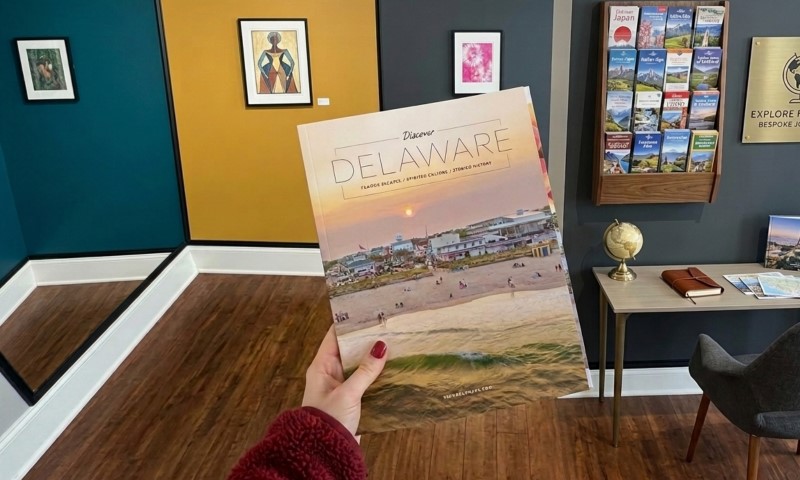
Anyone planning to become a travel agent in Delaware as an independent business owner should choose a legal structure.
Common options include:
- Sole proprietorship
- Partnership
- Limited liability company
- Corporation
Setup tasks may include:
- Choosing a business name
- Registering with Delaware
- Obtaining a business license
- Applying for an Employer Identification Number
- Opening a business bank account
- Creating bookkeeping procedures
- Preparing a startup budget
- Reviewing the host agreement
A home-based Delaware travel agent should also check local permits, zoning rules, rental restrictions, and homeowners’ association policies.
Errors and omissions insurance can protect a travel agent against certain claims connected with professional mistakes.
Client documents should cover:
- Terms and conditions
- Cancellation policies
- Change policies
- Credit-card authorization
- Supplier rules
- Travel insurance offers
- Privacy procedures
- Data-security practices
Passport details, payment information, and personal records should be stored through secure systems.
Additional licensing or training may apply to travel-insurance sales, so Delaware rules should be reviewed before offering coverage.
We Wrote About Surrouding States
| State | What to Know Before You Start |
|---|---|
| Maryland | No dedicated travel agent license is generally required, though business setup and any rules tied to travel services should still be reviewed |
| Pennsylvania | Focus on business registration, training, supplier access, and the systems needed to manage bookings professionally |
| New Jersey | Review business setup, local requirements, professional training, and supplier relationships before launching |
| Virginia | No general travel agent license is typically required, with business setup, training, and supplier access being the main considerations |
FAQs
Summary
No college degree or professional license is generally required to become a travel agent in Delaware.
A practical process includes choosing a business model, reviewing Delaware requirements, completing travel agent training, considering certification, gaining booking access, and setting up proper financial systems.
Host-agency support can simplify the early stages by providing tools, training, supplier access, and commission processing.
At Yeti Travel, we provide a structured program for advisors who want practical support while building a professional travel business.
Consistent learning, accurate bookings, responsive client care, organized records, and regular sales activity can help a new Delaware travel agent build a flexible career.