Becoming a travel agent in New Mexico starts with basic education, practical training, supplier access, and a clear business plan.
A college degree is not required, but clients expect strong planning skills, accurate information, and reliable support.
For beginners who want structure, Yeti Travel gives new advisors a host-agency path with training, supplier access, CRM tools, support, and commission opportunities, which can make the first stage of the career easier to manage.
New Mexico gives advisors a strong local edge through Santa Fe, Albuquerque, Taos, White Sands National Park, Native American cultural tourism, Hispanic heritage tourism, art, food, festivals, and outdoor adventure.
With the local market being so strong, it looks like a great reason to become a travel agent in New Mexico.
Let’s see how to achieve that.
Step #1 – Basic Requirements to Become a Travel Agent in New Mexico

A formal college degree is not required to become a travel agent in New Mexico.
A high school diploma or GED is generally the minimum educational qualification, including for people interested in luxury travel.
Many agents enter the field through host agencies, online travel agent training, supplier education, certifications, hospitality programs, or tourism programs.
Skill matters more than a specific degree.
An IATA number is one of the main business requirements for booking travel and earning commissions.
At Yeti Travel, we help new advisors start through a host-agency model that gives them access to the tools needed to book travel, earn commissions, and work with supplier systems.
Our Summit program includes support while advisors build a client base, access to supplier certifications, E&O insurance, a Travel+ CRM license, and the option to join CLIA.
Licensing depends on where clients live and where trips are sold.
New advisors should make sure their host agency has the right business credentials, including Seller of Travel licensing when needed for nationwide sales.
Certification is usually optional, but it can improve credibility.
Step #2 – Choose Your Travel Agent Career Path
A travel agent can work part-time, full-time, independently, or under a host agency.
Main career paths include:
- Independent travel agent
- Hosted travel advisor
- Luxury travel agent
- Cruise specialist
- Disney travel specialist
- Sandals or resort specialist
- Destination wedding or romance travel advisor
- Local New Mexico travel expert
- Corporate or group travel advisor
General agents sell many trip types.
Niche advisors focus on one area, such as cruises, honeymoons, Disney trips, luxury travel, safaris, wellness trips, Hawaii travel, or New Mexico-based experiences.
Luxury travel is a strong option for advisors who want to plan five-star trips.
Luxury agents work with premium hotels, luxury cruise lines, tour operators, villas, private rentals, specialty suppliers, destination specialists, and custom travel brands.
Interesting Fact: That local edge is backed by real demand. New Mexico welcomed 42.6 million visitors in 2024, and those travelers spent a record $8.8 billion across the state.
Step #3 – Get Travel Agent Training
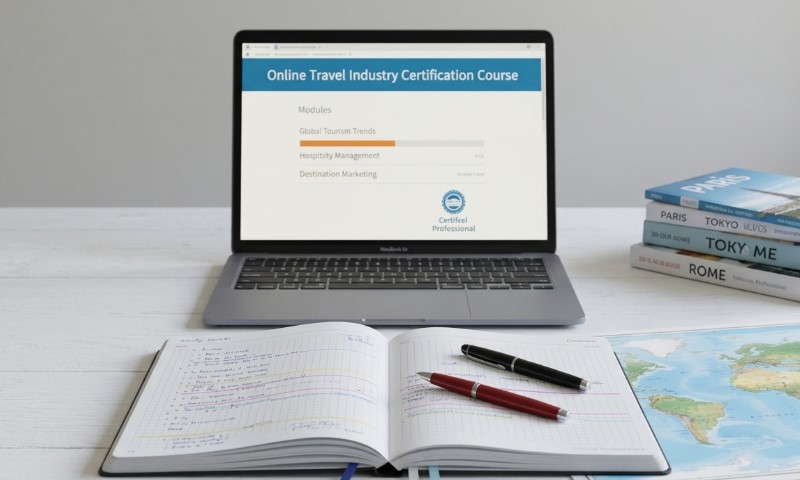
Training helps new advisors learn booking systems, client service, supplier relationships, itinerary planning, sales, and marketing.
Useful training options include:
- Online travel agent courses
- Supplier webinars
- Host agency training programs
- Community college or university hospitality programs
- Destination-specific training
- Sales and marketing training
Common training sources include The Travel Institute, eCornell, IATA-related education, ASTA resources, Penn Foster, University of New Mexico online travel and tourism training, and host agency onboarding.
Online programs may cover international travel, vacation packages, tour planning, computerized reservation systems, and client workflows.
Training should cover:
- Booking systems
- Supplier relationships
- Itinerary planning
- Client qualification
- Travel insurance basics
- Customer service
- Marketing and lead generation
- Destination knowledge
- Sabre, Amadeus, and Galileo
- Fraud and scam awareness
- Travel agent accounting
At Yeti Travel, we support new advisors with simple onboarding, new agent training, a 1-on-1 or group call, CRM access, supplier training, marketing training, weekly webinars, group discussions, advisor communities, and a full support team.
The program is designed so beginners can learn at their own pace while gaining practical tools for quoting, booking, marketing, and client management.
Step #4 – Consider Professional Certifications
Certifications are optional, but they help a New Mexico travel agent look more credible.
Common options include:
CTA is a good starting credential. CTC is more advanced and requires stronger experience and knowledge. TAP tests travel agent basics, customer service, and booking-system knowledge.
TAP preparation should include industry terminology, booking-system practice, customer service techniques, and practice exams.
Certifications can help new advisors build trust, strengthen professional knowledge, and stand out in a competitive market.
Step #5 – Decide if a Host Agency Fits Your Plan

A host agency gives beginners access to tools that are hard to build alone. Common benefits include:
- IATA number access
- Supplier relationships
- Booking tools
- Training
- Mentorship
- Marketing resources
- Commission support
- Back-office systems
- CRM systems
- Proprietary booking engines
- Advisor communities
Host agencies can reduce startup work, simplify supplier access, and help new advisors earn commissions sooner. They are especially useful for agents with no prior travel experience.
Compare host agencies based on training, booking-system access, marketing support, community access, certification help, cost, support level, reputation, and commission structure.
We offer a host-agency setup with simple onboarding.
Our plan options include a $99 one-time Summit option with 70% commissions and a $199 yearly Summit Plus option with 75% to 85% commissions.
Step #6 – Build Your Destination and Supplier Knowledge
A travel agent needs strong knowledge of flights, hotels, resorts, cruises, tours, all-inclusive vacations, luxury travel, group travel, adventure travel, domestic trips, corporate travel, honeymoons, and destination weddings.
New Mexico knowledge can help local advisors stand out. Strong planning angles include:
- Santa Fe’s art district
- Taos Mountain
- White Sands National Park
- Native American cultural tourism
- Hispanic heritage tourism
The spending patterns also show where advisors can create stronger itineraries.
In 2024, New Mexico visitors spent:
- $2.8 billion on lodging
- $2.1 billion on food and beverage
- $1.4 billion on retail
- $1.1 billion on recreation and entertainment.
That makes hotels, dining, shopping, tours, and activities important parts of the planning process.
Advisors should learn cruise lines, tour operators, hotels, resorts, destination management companies, tourism boards, air consolidators, car rental companies, and hoteliers.
We give advisors access to relationships with more than 40 major travel companies, including Disney, Universal Studios, Royal Caribbean, Sandals, Carnival, and other suppliers across cruises, resorts, hotels, tours, insurance, rail, excursions, and vacation packages.
That supplier access helps advisors sell a wide range of trips while learning how different travel products fit different clients.
Luxury-focused advisors should study premium hotel brands, luxury cruise lines, boutique hotels, villas, private rentals, private jet options, yacht charters, and concierge-level service.
Step #7 – Gain Practical Experience
Practical experience helps new agents learn how real bookings work.
Good options include host agency onboarding, internships, part-time travel roles, mentorship, supplier training, practice itineraries, role-play exercises, and early client work.
New advisors should practice how to:
- Qualify clients
- Compare suppliers
- Build quotes
- Present itineraries
- Manage payments
- Handle travel disruptions
- Process travel documents
- Manage bookings
- Keep client transaction records
Travel agents also manage paperwork, booking records, client transactions, tour packages, and communication between clients and travel providers.
Communication and problem-solving are essential.
A travel agent may need to handle delayed flights, resort changes, payment deadlines, passport questions, room issues, transfers, insurance, or last-minute client concerns.
Step #8 – Set Up Your Travel Business
A clear business setup helps new advisors stay organized. Possible models include:
- Part-time side business
- Full-time independent agency
- Hosted advisor model
- Niche specialty business
- Luxury travel business
- Group travel business
Target clients may include families, couples, retirees, luxury travelers, adventure travelers, New Mexico residents, destination wedding clients, corporate groups, honeymooners, Disney travelers, and cruise travelers.
Basic business materials should include a business name, website or landing page, professional email, social media profiles, client inquiry form, CRM system, booking workflow, service-fee structure, supplier contacts, and host agency contacts.
Advisors should also define product offerings, research the customer base, and choose income streams.
Common income sources include supplier commissions, planning fees, service fees, group travel fees, excursions, transfers, insurance, and tours.
Career data shows around 150 employed travel agents in New Mexico and about 20 annual job openings, so the field is realistic but competitive.
Nationally, travel agents earned a median annual wage of $48,450 in May 2024.
The occupation is projected to grow 2% from 2024 to 2034, with about 7,100 openings each year, mainly tied to replacement needs as workers change careers or leave the labor force.
Useful business resources include the Small Business Administration, Small Business Development Centers, and local business support organizations.
Before joining a host agency, compare monthly or annual fees, booking-system access, marketing support, education, community access, supplier access, and commission structure.
FAQs
Summary
A strong plan to become a travel agent in New Mexico starts with basic education, training, supplier access, practical experience, and a business model that fits your goals.
A high school diploma or GED can be enough to begin, while a host agency, IATA number access, certifications, and booking-system training can help build credibility faster.
New Mexico gives advisors a useful local advantage through Santa Fe, Albuquerque, Taos, White Sands National Park, cultural tourism, festivals, food, art, and outdoor adventure. With a clear niche, steady marketing, and professional support, a New Mexico travel agent can build a credible travel business.